Blueberry Lemon Sourdough Bread Recipe-Tangy & Sweet
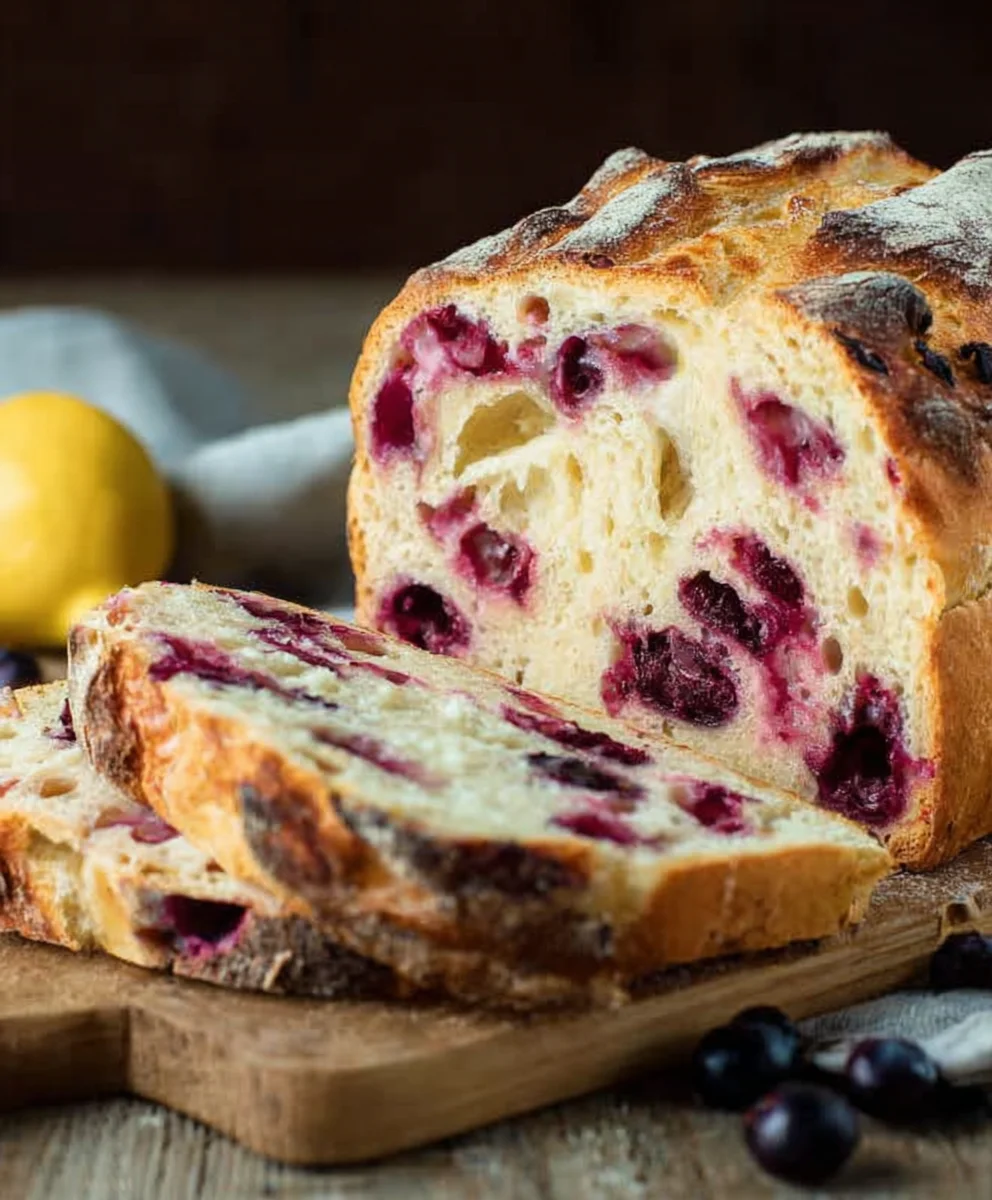
Blueberry Lemon Sourdough Bread isn’t just a breakfast treat; it’s an experience. Imagin extracte that first glorious slice, the tangy sourdough crust giving way to a soft, airy interior bursting with plump, juicy blueberries. Then comes the bright, zesty kiss of lemon, a perfect counterpoint to the berries’ sweetness and the sourdough’s subtle tang. It’s no wonder this combination has captured the hearts (and taste buds!) of bakers everywhere. People adore this bread for its delightful contrast of flavors and textures. The natural fermentation of the sourdough starter lends an incredible depth and complexity that you just can’t replicate with commercial yeast. What truly makes Blueberry Lemon Sourdough Bread so special is the harmonious marriage of sweet and tart, a comforting yet sophisticated loaf that’s perfect for a leisurely weekend brunch, a delightful afternoon snack, or even a unique dessert. Get ready to elevate your baking game with this irresistible recipe!
Ingredients:
- 3 cups bread flour
- 1⅓ cups lukewarm water
- ¾ cup active sourdough starter (ensure it’s bubbly and well-fed)
- 3 tablespoons white sugar
- 1 teaspoon salt
- 1¼ cup fresh blueberries
- 1 tablespoon lemon zest (from about 1 large lemon)
Preparing the Dough
Step 1: Autolyse and Starter Integration
In a large mixing bowl, combine the 3 cups of bread flour with the 1⅓ cups of lukewarm water. Mix them together until just combined, ensuring there are no dry pockets of flour. This initial step is called an autolyse, and it allows the flour to fully hydrate, which helps develop the gluten structure more efficiently. Cover the bowl with a damp cloth or plastic wrap and let it rest for 30 minutes to an hour. This resting period is crucial for a tender crum extractb. After the autolyse, gently add your ¾ cup of active, bubbly sourdough starter to the dough. Use your hands to dimple the starter into the dough, then pinch and fold it in until it’s mostly incorporated. Don’t worry about perfection at this stage; further mixing will help it integrate fully.
Step 2: Adding Sugar, Salt, and Initial Kneading
Once the starter is roughly incorporated, it’s time to add the remaining flavor and structure components. Sprinkle the 3 tablespoons of white sugar and the 1 teaspoon of salt over the dough. The sugar will contribute to browning and a hint of sweetness, balancing the tang of the sourdough, while the salt is essential for controlling fermentation and strengthening the gluten network. Begin extract to knead the dough directly in the bowl. You can use a stand mixer with a dough hook attachment on a low speed for about 5-7 minutes, or you can knead by hand. If kneading by hand, use a folding and stretching motion, pushing the dough away from you with the heel of your hand and then folding it back over itself. Continue this process until the dough starts to become smoother and more elastic. It might still be a little sticky, which is perfectly normal.
Developing the Dough
Step 3: Bulk Fermentation and Fold Incorporations
Cover the bowl again and let the dough rest at room temperature. This is the bulk fermentation phase, where the sourdough starter works its magic, creating gas and developing flavor. Over the next 2-3 hours, you’ll perform a series of “stretch and folds.” Aim to do these every 30-45 minutes. To perform a stretch and fold, wet your hands slightly to prevent sticking. Reach into the bowl, grab a portion of the dough, stretch it upwards gently, and then fold it back over itself towards the center of the bowl. Rotate the bowl a quarter turn and repeat this process 3-4 times for each set of folds. This technique builds strength and structure without excessive kneading. During the third or fourth set of folds, you’ll gently incorporate the blueberries and lemon zest.
Step 4: Incorporating Blueberries and Lemon Zest
For the blueberries, ensure they are fresh and dry. If using frozen, thaw them and pat them very dry with a paper towel to avoid adding too much excess moisture to the dough. As you perform your stretch and folds during the third or fourth session, gently scatter the 1¼ cup of blueberries and the 1 tablespoon of lemon zest over the surface of the dough. Carefully perform the stretch and fold motions, allowing the blueberries and zest to distribute themselves throughout the dough. Be gentle to avoid breaking too many of the berries, as this can bleed color into the dough. The lemon zest will add a bright, citrusy aroma and flavor that beautifully complements the blueberries and sourdough tang.
Shaping and Baking
Step 5: Final Proofing and Shaping
After the bulk fermentation is complete (the dough should have increased in volume by about 50-75% and look airy), turn the dough out onto a lightly floured surface. Gently shape the dough into your desired loaf form, whether it’s a round boule or an oval batard. Try to create surface tension by tucking the edges underneath the dough. You can do this by gently pulling the dough towards you on the counter, creating a tight skin on top. Place the shaped dough into a well-floured banneton (proofing basket) or a bowl lined with a floured tea towel, seam-side up. Cover it and let it proof at room temperature for 1-2 hours, or place it in the refrigerator for a longer, slower proof overnight. The overnight proof in the fridge will further develop flavor and make the dough easier to score.
Step 6: Baking the Blueberry Lemon Sourdough Bread
Preheat your oven to 450°F (230°C) with a Dutch oven or baking stone inside. If using a Dutch oven, place it in the oven during the preheating phase. Once the dough has finished its final proof, carefully turn it out onto a piece of parchment paper. Score the top of the loaf with a sharp knife or a lame. This allows the bread to expand in a controlled manner during baking. Carefully transfer the dough (on the parchment paper) into the preheated Dutch oven or onto the baking stone. Cover the Dutch oven with its lid. Bake for 20 minutes with the lid on. After 20 minutes, remove the lid from the Dutch oven (or if baking on a stone, you can reduce the temperature to 425°F or 220°C at this point). Continue baking for another 20-25 minutes, or until the crust is a deep golden brown and the internal temperature reaches around 205-210°F (96-99°C). The aroma of lemon and blueberry will fill your kitchen! Once baked, carefully remove the bread from the oven and let it cool completely on a wire rack before slicing and enjoying. This cooling period is essential for the internal structure to set properly.
Conclusion:
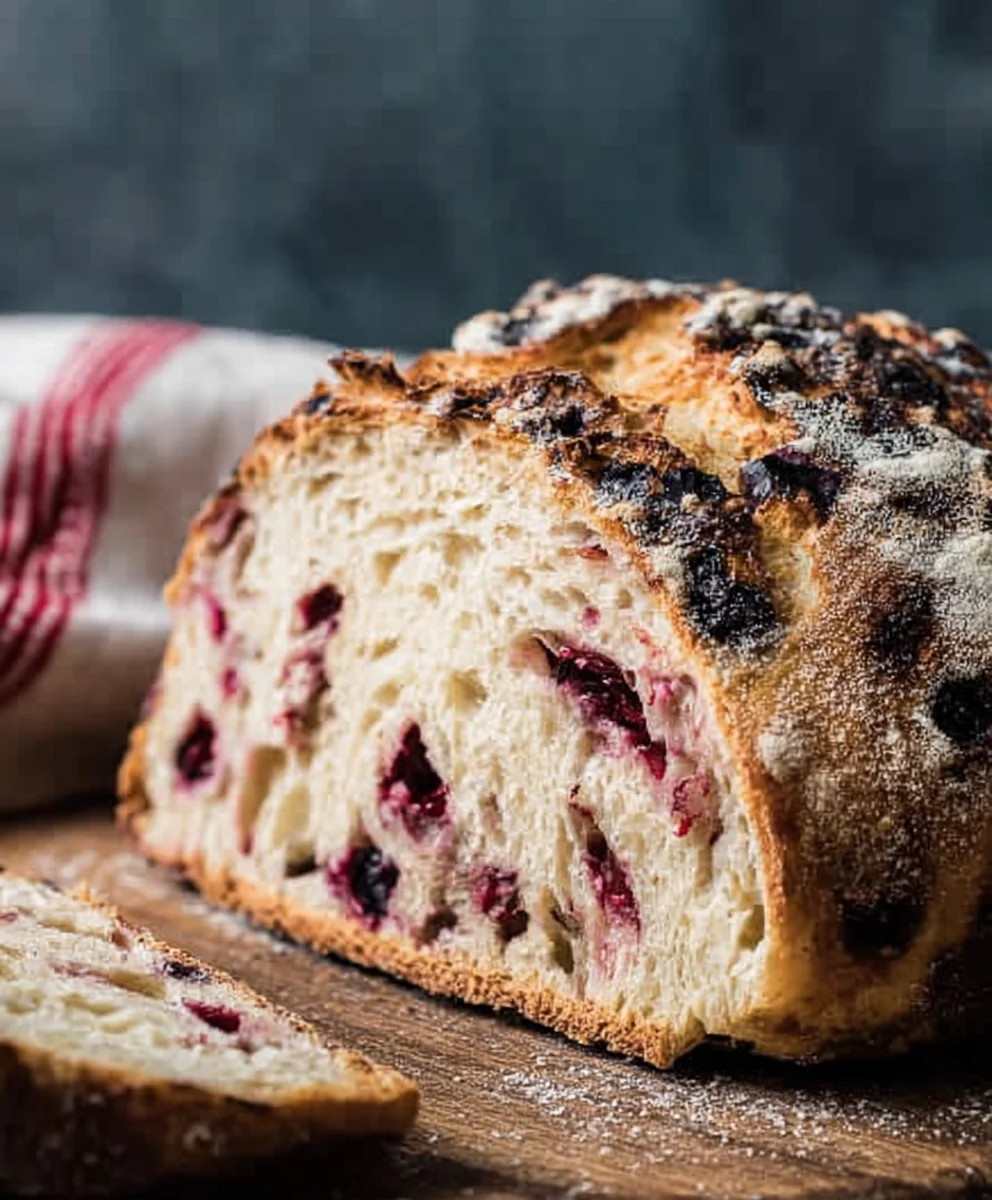
And there you have it – your very own delicious Blueberry Lemon Sourdough Bread! This recipe combines the tangy goodness of sourdough with the bright burst of blueberries and the zesty perfume of lemon, creating a loaf that’s both comforting and invigorating. We’ve walked through the process step-by-step, and I truly hope you feel empowered to try this delightful creation in your own kitchen. The aroma that fills your home as this bread bakes is simply divine, and the taste is even better. Slice it thick and enjoy it warm, perhaps with a dollop of cream cheese or a drizzle of honey. This bread is also fantastic toasted and served with your morning coffee or tea. Don’t be afraid to experiment! You can add a touch of lavender for a floral note, or perhaps some chopped almonds for added crunch. The possibilities are endless, and the reward of a homemade sourdough loaf is immense. I encourage you to give the Blueberry Lemon Sourdough Bread a try and discover the joy of baking with a starter!
Frequently Asked Questions:
Can I use frozen blueberries instead of fresh?
Absolutely! If using frozen blueberries, it’s best to toss them in a tablespoon of your flour mixture before adding them to the dough. This helps to prevent them from bleeding too much color into the dough and keeps them from sinking to the bottom. You might also want to give them a gentle rinse and pat them dry before coating them in flour.
My sourdough starter isn’t very active. Can I still make this bread?
While an active and bubbly sourdough starter is ideal for a good rise and flavor, you might still achieve a delicious loaf even with a less vigorous starter. The key is to be patient with the fermentation process. It may take longer for the dough to rise, so be prepared to let it proof for an extended period. If your starter is consistently sluggish, you might consider feeding it more frequently or using a different flour for feeding to boost its activity before you begin extract.
What is the best way to store Blueberry Lemon Sourdough Bread?
Once completely cooled, the best way to store your Blueberry Lemon Sourdough Bread is at room temperature, wrapped tightly in a bread bag or plastic wrap. It should stay fresh for 2-3 days. For longer storage, you can slice the bread and freeze it in an airtight container or freezer bag. Reheat slices in a toaster or oven for the best texture.
Blueberry Lemon Sourdough Bread
A delightful sourdough bread recipe featuring the tangy zest of lemon and sweet bursts of blueberries, resulting in a perfectly balanced loaf.
Ingredients
-
3 cups bread flour
-
1⅓ cups lukewarm water
-
¾ cup active sourdough starter
-
3 tablespoons white sugar
-
1 teaspoon salt
-
1¼ cup fresh blueberries
-
1 tablespoon lemon zest
Instructions
-
Step 1
Combine bread flour and lukewarm water in a large bowl. Mix until just combined, ensuring no dry flour pockets. Cover and let rest for 30 minutes to an hour for autolyse. Gently add active sourdough starter, dimpling and folding it in until mostly incorporated. -
Step 2
Sprinkle white sugar and salt over the dough. Knead in a stand mixer on low speed for 5-7 minutes, or knead by hand using a folding and stretching motion until the dough becomes smoother and more elastic. -
Step 3
Cover the bowl and let the dough undergo bulk fermentation at room temperature for 2-3 hours. Perform stretch and folds every 30-45 minutes. To do this, wet your hands, stretch a portion of the dough upwards, and fold it back towards the center. Rotate and repeat 3-4 times per set. -
Step 4
During the third or fourth set of stretch and folds, gently incorporate the fresh, dry blueberries and lemon zest. Distribute them evenly throughout the dough, being careful not to break too many berries. -
Step 5
Once bulk fermentation is complete (dough has increased by 50-75% and looks airy), turn the dough onto a lightly floured surface. Gently shape into a boule or batard, creating surface tension. Place seam-side up into a well-floured banneton or a floured tea towel-lined bowl. Cover and proof at room temperature for 1-2 hours, or refrigerate overnight for a slower, flavor-enhancing proof. -
Step 6
Preheat oven to 450°F (230°C) with a Dutch oven or baking stone inside. Turn the proofed dough out onto parchment paper and score the top. Carefully transfer to the hot Dutch oven (covered) or baking stone. Bake covered for 20 minutes. Remove lid (or reduce temp to 425°F/220°C if on stone) and bake for another 20-25 minutes until deep golden brown and internal temperature reaches 205-210°F (96-99°C). Cool completely on a wire rack before slicing.
Important Information
Nutrition Facts (Per Serving)
It is important to consider this information as approximate and not to use it as definitive health advice.
Allergy Information
Please check ingredients for potential allergens and consult a health professional if in doubt.