Easy Japchae- Korean Glass Noodle Stir Fry Recipe
Japchae, the beloved Korean glass noodle stir fry, is a dish that truly sings. It’s a vibrant symphony of textures and flavors, a culinary masterpiece that has captured hearts and taste buds across the globe. Why is Japchae so universally adored? It’s that delightful chegrape juicess of the sweet potato noodles, perfectly balanced with the crispness of fresh vegetables and the savory depth of marinated meats or mushrooms. What truly sets this dish apart is its inherent versatility and its ability to be both a comforting everyday meal and an elegant centerpiece for special occasions. Each forkful of Japchae offers a delightful surprise, a playful dance between tender-crisp vegetables, succulent protein, and those irresistible, glossy noodles coated in a subtly sweet and savory sauce. It’s a dish that promises satisfaction and always delivers.
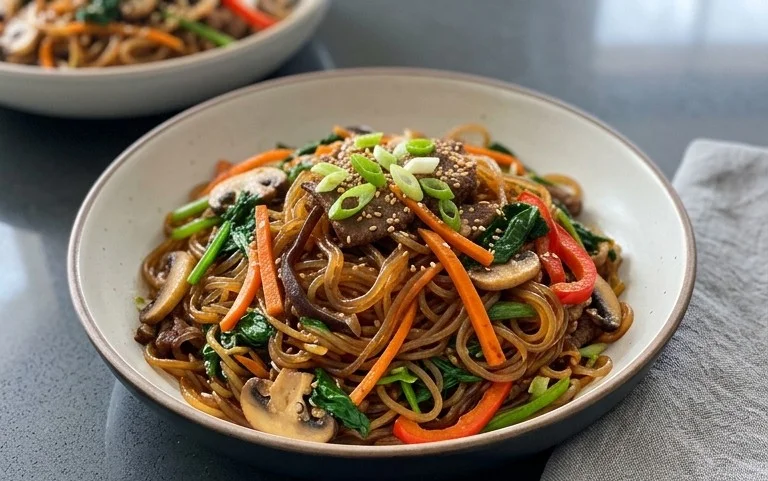
Japchae (Korean Glass Noodle Stir Fry)
Japchae is a vibrant and incredibly satisfying Korean dish that’s a staple at celebrations and family gatherings. Its name translates to “mixed vegetables,” and while it features a colorful medley of them, the star of the show is undoubtedly the chewy, translucent sweet potato glass noodles. The dish is a delightful balance of sweet, savory, and nutty flavors, with a pleasing texture from the tender vegetables and succulent meat. It’s a dish that looks as good as it tastes, making it a showstopper for any occasion. Making japchae at home might seem a little involved at first, but once you break it down, it’s quite manageable and incredibly rewarding. Let’s get started on creating this beloved Korean classic!
Ingredients:
Preparing the Components
The key to a successful japchae is to prepare all your ingredients and cook each component separately before combining them. This ensures that everything is cooked perfectly and the flavors meld beautifully.
Noodle Preparation
Marinade and Vegetable Prep
Cooking the Elements
Now comes the fun part – cooking each ingredient so it’s perfectly tender and flavorful.
Cooking the Beef, Eggs, and Vegetables
Assembling the Japchae
This is where all your hard work comes together to create a beautiful and delicious dish.
Conclusion:
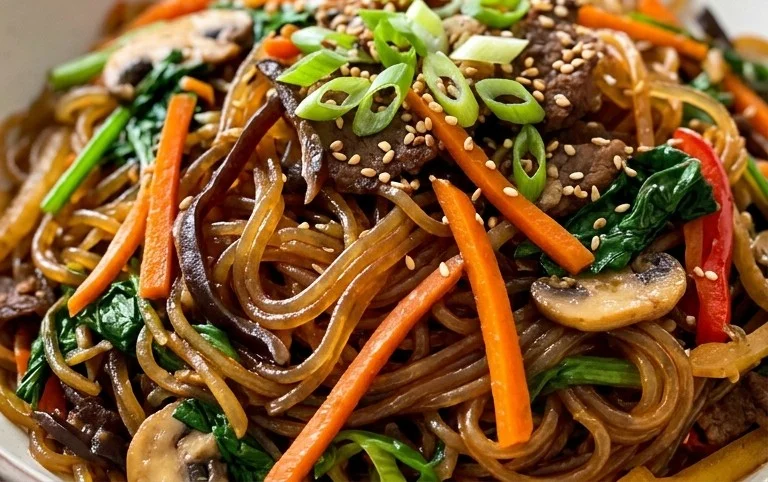
And there you have it – your gateway to making delicious Japchae at home! This Korean glass noodle stir fry is a truly special dish, celebrated for its delightful textures, vibrant colors, and a perfectly balanced sweet and savory flavor profile. The chewy glass noodles, combined with the crisp vegetables and tender protein, create a symphony in every bite. It’s incredibly versatile, making it a fantastic option for family dinners, gatherings with friends, or even as a comforting solo meal. I truly encourage you to give this Japchae recipe a try; I’m confident you’ll fall in love with it just as much as I have.
Feel free to get creative with your additions! This Japchae recipe is wonderfully adaptable. You can swap out the beef for thinly sliced chicken, beef, or even tofu for a vegetarian or vegan rendition. Mushrooms like shiitake or oyster mushrooms add an extra layer of umami. For added crunch, consider adding some blanched broccoli florets or snow peas. Serve it as a main course alongside some kimchi, or as a delightful side dish to other Korean favorites like bulgogi or Korean fried chicken.
Frequently Asked Questions:
Can I make Japchae ahead of time?
Yes, you can! Japchae is actually quite good made a few hours ahead or even the day before. The flavors meld together beautifully. However, the noodles can absorb more liquid and become softer upon sitting. To prevent this, you can cook the components separately and then combine them just before serving, or toss the cooked noodles with a little sesame oil to prevent sticking. Gently reheat it on the stovetop over low heat or in the microwave.
What are Korean glass noodles?
Korean glass noodles, known as dangmyeon, are typically made from sweet potato starch. They are translucent and have a delightfully chewy and slippery texture that is distinct from other types of noodles. They absorb flavors wonderfully, making them the perfect base for the savory and slightly sweet sauce in Japchae.
Is Japchae spicy?
Traditionally, Japchae is not spicy. The primary flavors are savory, sweet, and a hint of sesame oil. If you enjoy a bit of heat, you can easily add a pinch of red pepper flakes to the sauce or serve it with a side of gochujang for dipping.
Japchae (Korean Glass Noodle Stir Fry)
A classic Korean dish featuring chewy glass noodles stir-fried with a colorful assortment of vegetables and tender beef.
Ingredients
-
12 ounces sweet potato glass noodles
-
16 ounces beef (cut into strips)
-
2 large eggs (beaten)
-
1 large carrot (peeled and julienned)
-
1 medium yellow onion (thinly sliced)
-
3 mushrooms (thinly sliced)
-
2 cups baby spinach (packed)
-
2 stalks green onion (cut into 1 inch pieces)
-
oil (for cooking)
-
Toasted sesame seeds (optional for garnish)
-
Salt and black pepper (as needed)
-
7 tablespoons soy sauce (light sodium)
-
3 tablespoons honey
-
2 tablespoons brown sugar
-
2 tablespoons toasted sesame oil
Instructions
-
Step 1
Cook glass noodles according to package directions. Drain, rinse with cold water, and toss with 1 tablespoon of sesame oil and a pinch of salt. Set aside. -
Step 2
In a bowl, marinate the beef strips with 2 tablespoons soy sauce, 1 tablespoon honey, 1 tablespoon brown sugar, and a pinch of black pepper. Let it sit for at least 15 minutes. -
Step 3
Heat 1 tablespoon of oil in a large skillet or wok over medium-high heat. Add the marinated beef and stir-fry until browned. Remove from skillet and set aside. -
Step 4
Add another tablespoon of oil to the skillet. Stir-fry the onions and carrots for 2-3 minutes until slightly softened. Add the mushrooms and cook for another 2 minutes. -
Step 5
Push the vegetables to one side of the skillet. Pour the beaten eggs into the empty space and cook, scrambling lightly, until set. Chop the cooked egg into small pieces and mix with the vegetables. -
Step 6
Add the cooked noodles, stir-fried beef, baby spinach, and green onions to the skillet. In a small bowl, whisk together the remaining 5 tablespoons soy sauce, 2 tablespoons honey, 1 tablespoon brown sugar, and 1 tablespoon toasted sesame oil. Pour the sauce over the noodles and vegetables. -
Step 7
Toss everything together gently over medium heat until the spinach is wilted and all ingredients are well combined and heated through. Season with salt and pepper to taste. -
Step 8
Serve hot, garnished with toasted sesame seeds if desired.
Important Information
Nutrition Facts (Per Serving)
It is important to consider this information as approximate and not to use it as definitive health advice.
Allergy Information
Please check ingredients for potential allergens and consult a health professional if in doubt.